
Notice of Article Publication_Seasonal Journal: Kyo Winter Issue 2025
Yamamo’s initiatives were featured in the “Sato” community magazine section of the Akita Sakigake Shinpo newspaper. Immediately after publication, we received inquiries about our products and visitors to our store, highlighting the influence of the local paper and the trust built in the community over many years.
The article introduced our products, from “Yamamo Miso,” which led to the discovery of Viamver® yeast, to our “Fermented Mayonnaise,” developed through further technical advancements. The article also touched on our restaurant service, as well as the whole-house rental accommodation we offer in the renovated, registered cultural property “Hikoshiro Warehouse,” managed by Seiichi Shirai’s grandson, Taro Shiraihara.
We aim to enrich our products and experiential services, allowing guests to experience the values we cherish and the culture rooted in our brewery. We hope you will take a look at the article. _mediainfo._magazine
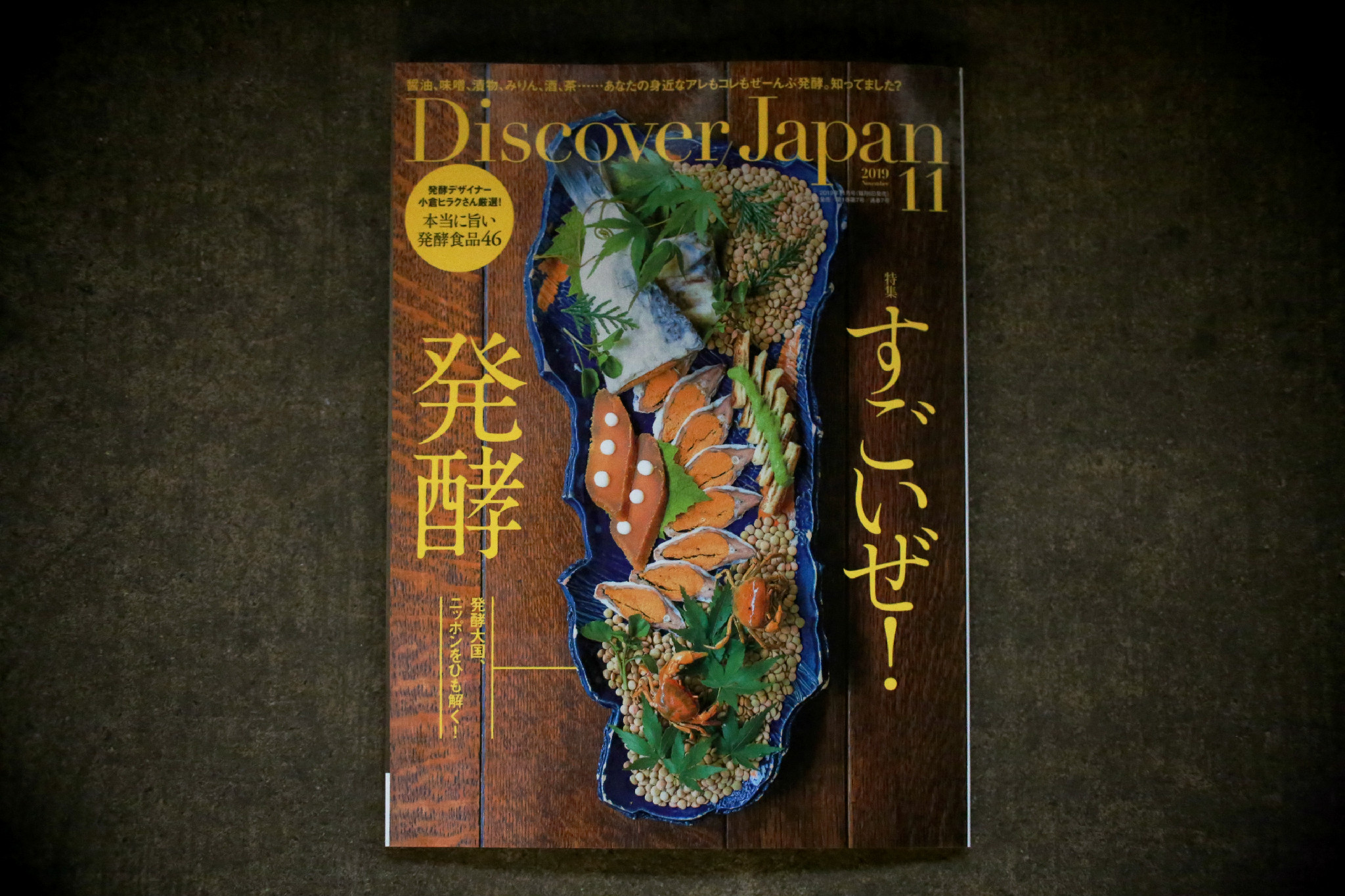
Exploring Akita Miso “Akita Miso,” born from Akita’s rich natural environment. Its flavor varies from brewery to brewery. We explored the history and dedication of three representative breweries within the prefecture.
Preserving Tradition While Pursuing Innovative Miso Production
Yuzawa City, Yamamo Brewery / TAKAMO &Corp.
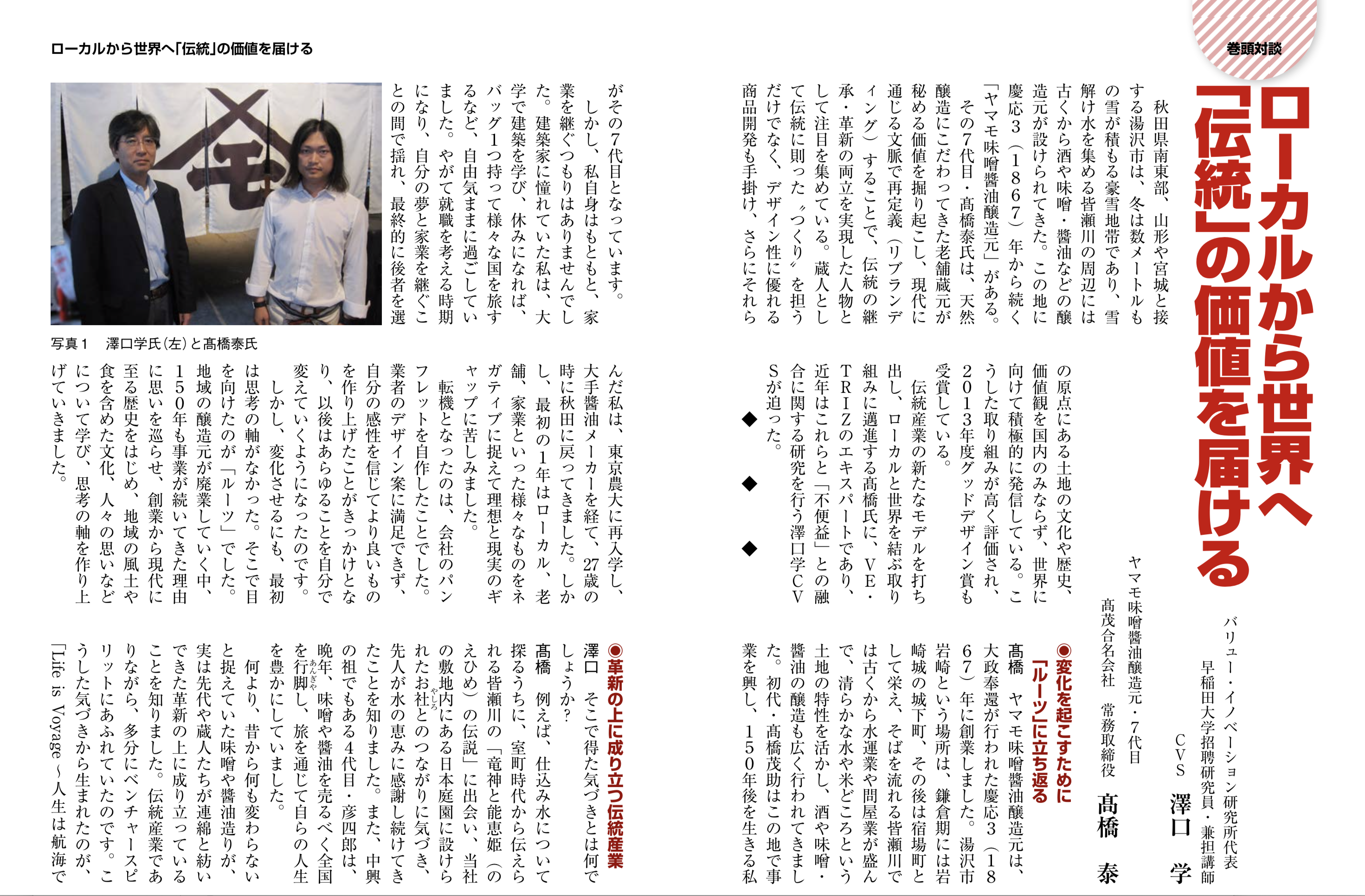
The Iwasaki region, where the brewery is located, is a land rich in water resources, home to the legend of Princess Noe, one of Akita’s three great legends. The founder established the brewing business using the blessings of the underground water of the Minase River, the setting of that legend, and has continued brewing steadily for over 150 years since then. Yasushi Takahashi, the seventh-generation owner, preserves this history while generating and implementing various new ideas. During his university years, he majored in architecture. “I had no intention of taking over the family business,” says Yasushi. However, when he paused to reflect on his purpose, he realized his role was to breathe new life into this historic culture.
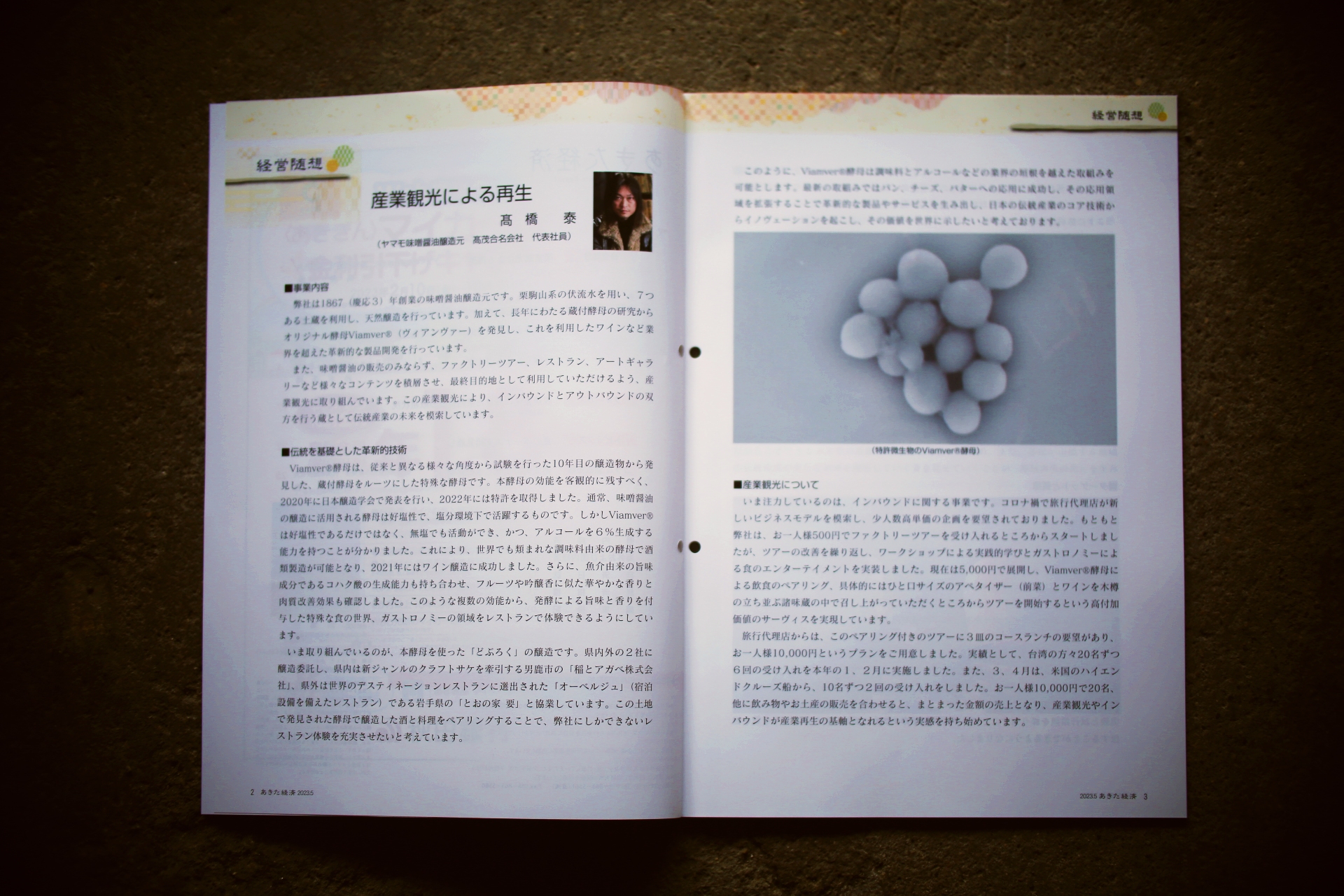
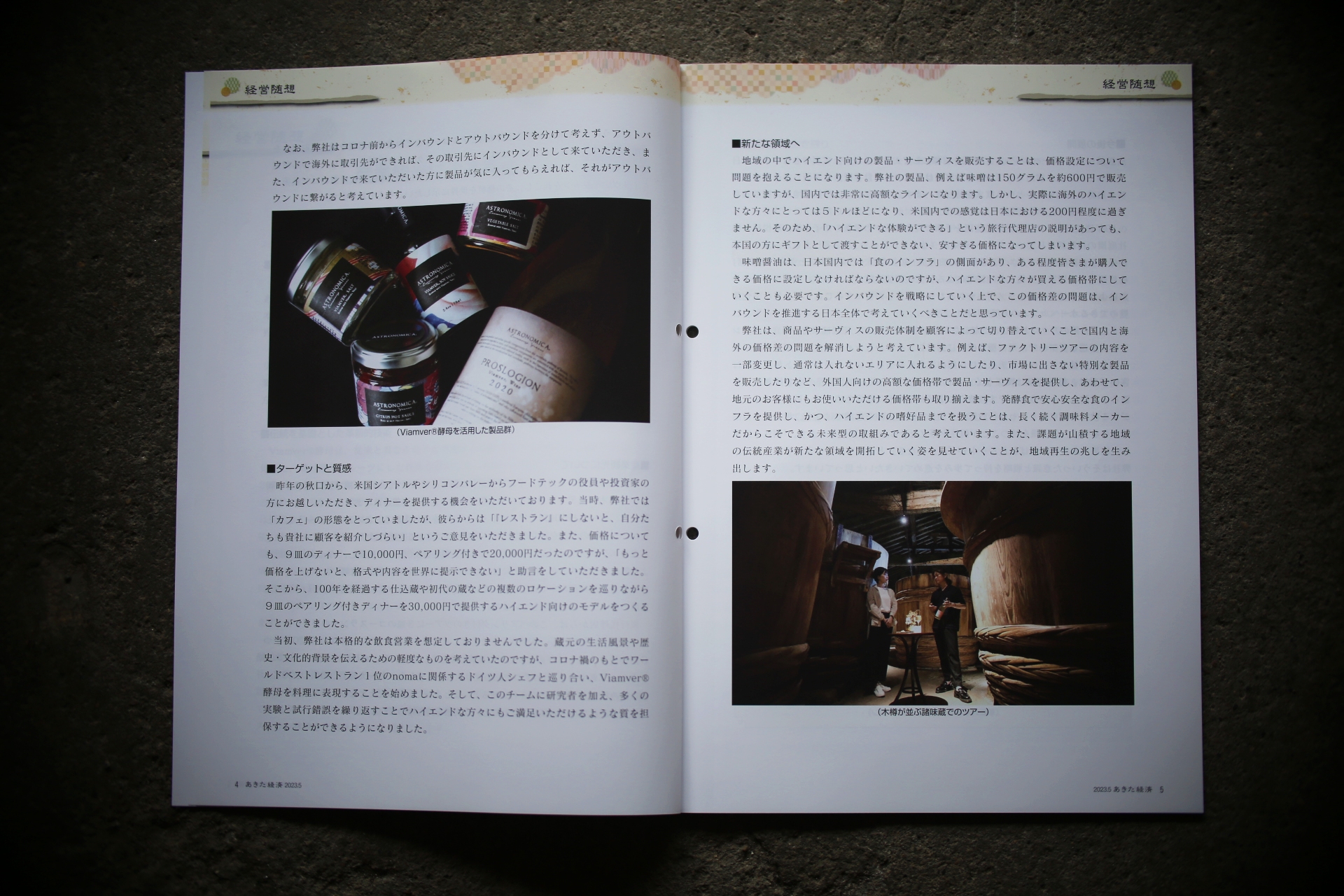
While continuing the traditional production of soy sauce and standard miso, after ten years of experimental brewing, we discovered a unique yeast that creates fruity aromas and umami, and named it “Viamver®”. Ordinary miso yeast is halophilic and can hardly function in a salt-free environment. In contrast, Viamver® can survive in a salt concentration of 0–18%, produce alcohol, and generate more than twice the amount of succinic acid—an umami component abundant in shellfish—compared to average miso yeast. Discovering a new yeast useful for food is considered as difficult as finding a new planet. With this meaning in mind, the Viamver® project team was named “ASTRONOMICA®”, which includes researchers, chefs, and artists. They are pursuing new worlds of fermentation through menu development incorporating Viamver® and applications in natural wine.
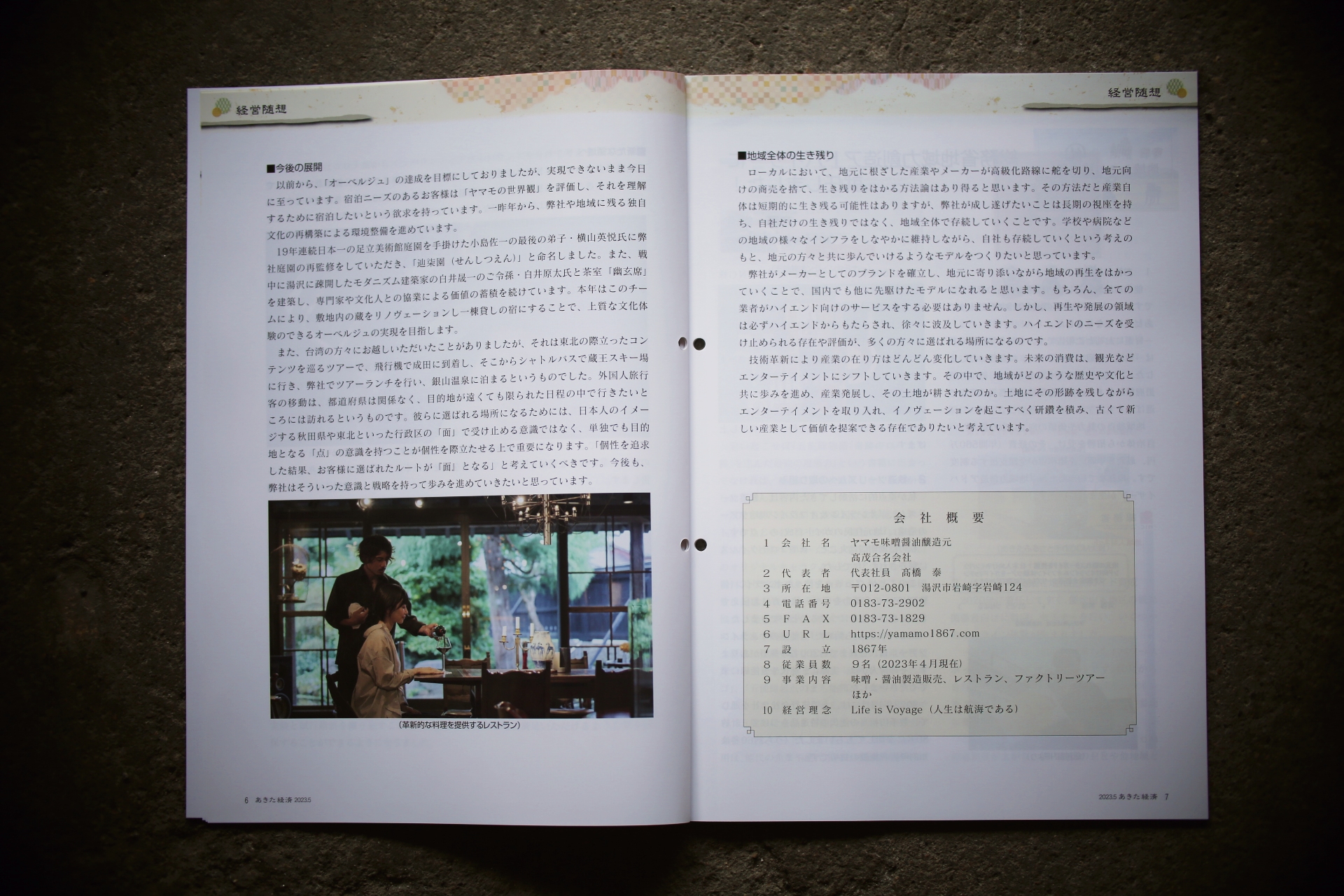
The fully reservation-based dinner tour offers cuisine at five distinct locations throughout the entire brewery. Guests engage with the innovative philosophy of the 7th generation owner, Yasushi Takahashi, while reflecting on the historic cellar and sensing the astronomically vast potential of fermentation through Viangua-based cuisine. This unique experience has drawn attention from across Japan and overseas. Currently, a renovated cellar building is under construction as an exclusive rental accommodation. It looks like it will become a place where you can fully immerse yourself in a deeper world.
The main dish served on the dinner tour. Shirakami lamb is marinated in Viamver® brine to eliminate its characteristic gaminess and tenderize the meat. The pairing is doburoku sake commissioned from Toono-ya (Iwate Prefecture).
Viamver® MAYONNAISE A fermented mayonnaise made with rice koji and soy milk, without egg yolks. Its sour cream-like tang and mellow flavor pair well with salads and salmon.
Nameko Mushroom and Tofu Miso Soup Made with “Yamamo Miso” The miso that served as the foundation for the discovery of “Viamver®” yeast. By limiting salt content to 8%, it delivers a finish where you can better appreciate the sweetness of the koji and the umami imparted by the yeast. It transforms an ordinary, everyday miso soup into a memorable bowl.
Notice of Article Publication_Akita Sakigake-Shimpo
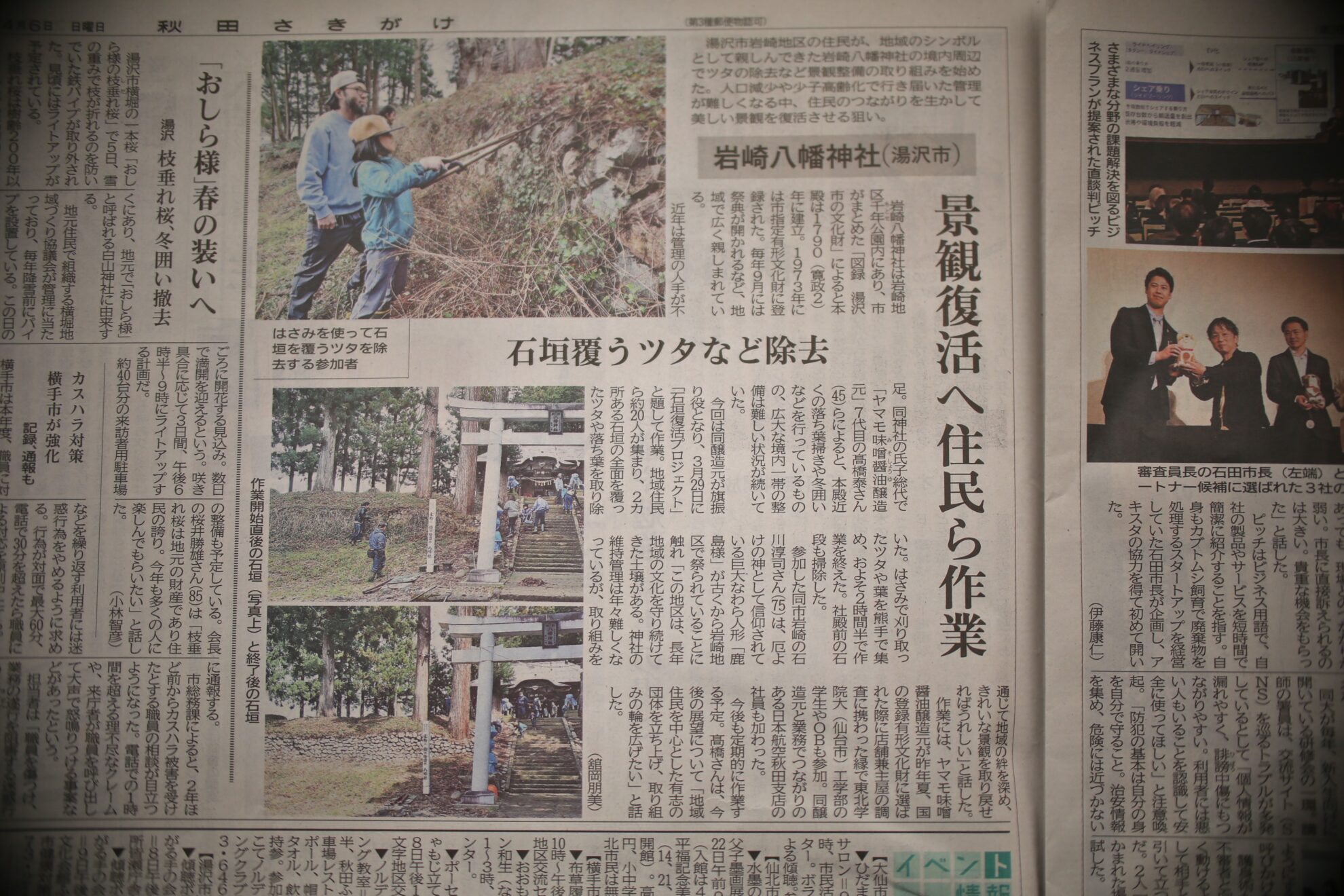
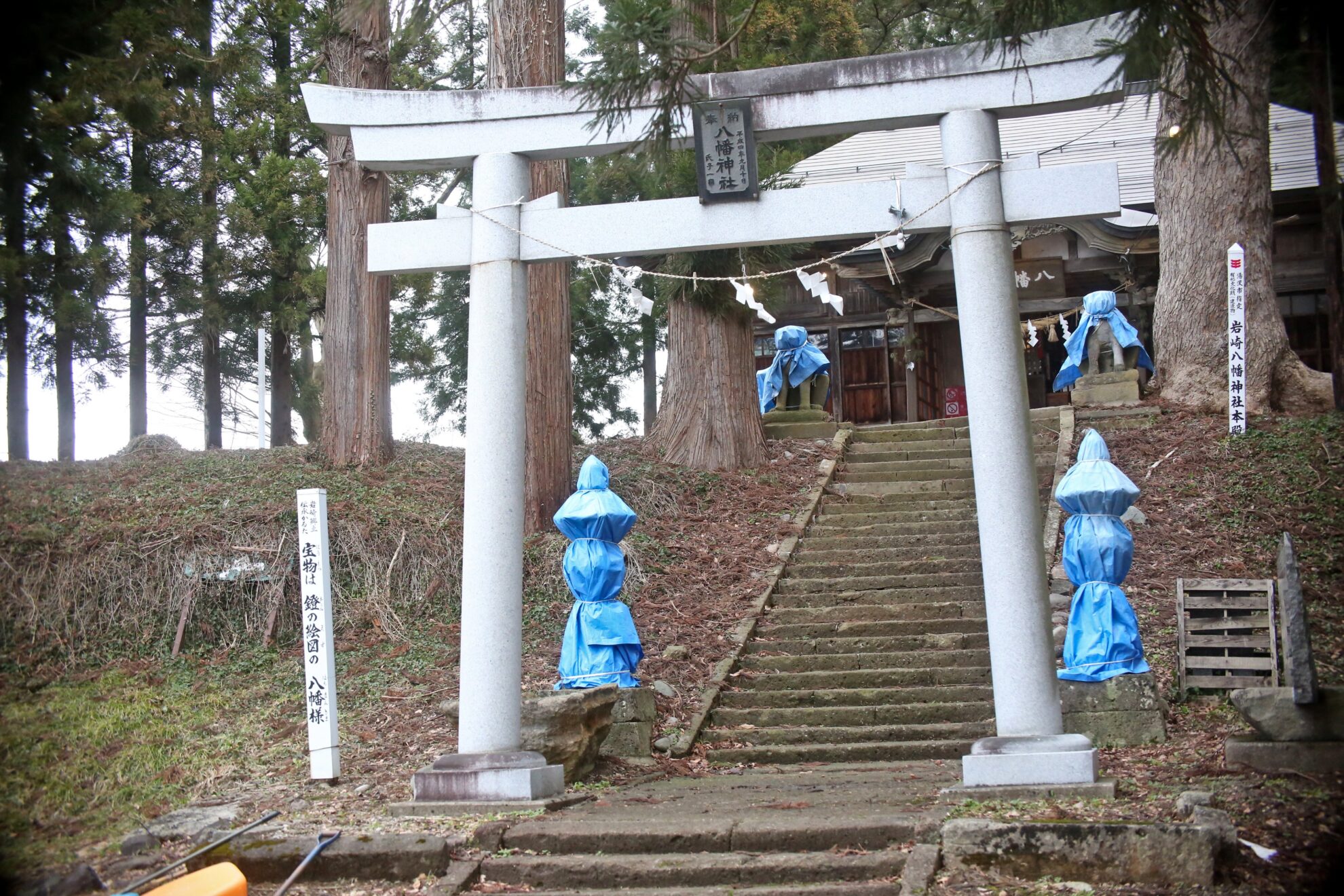
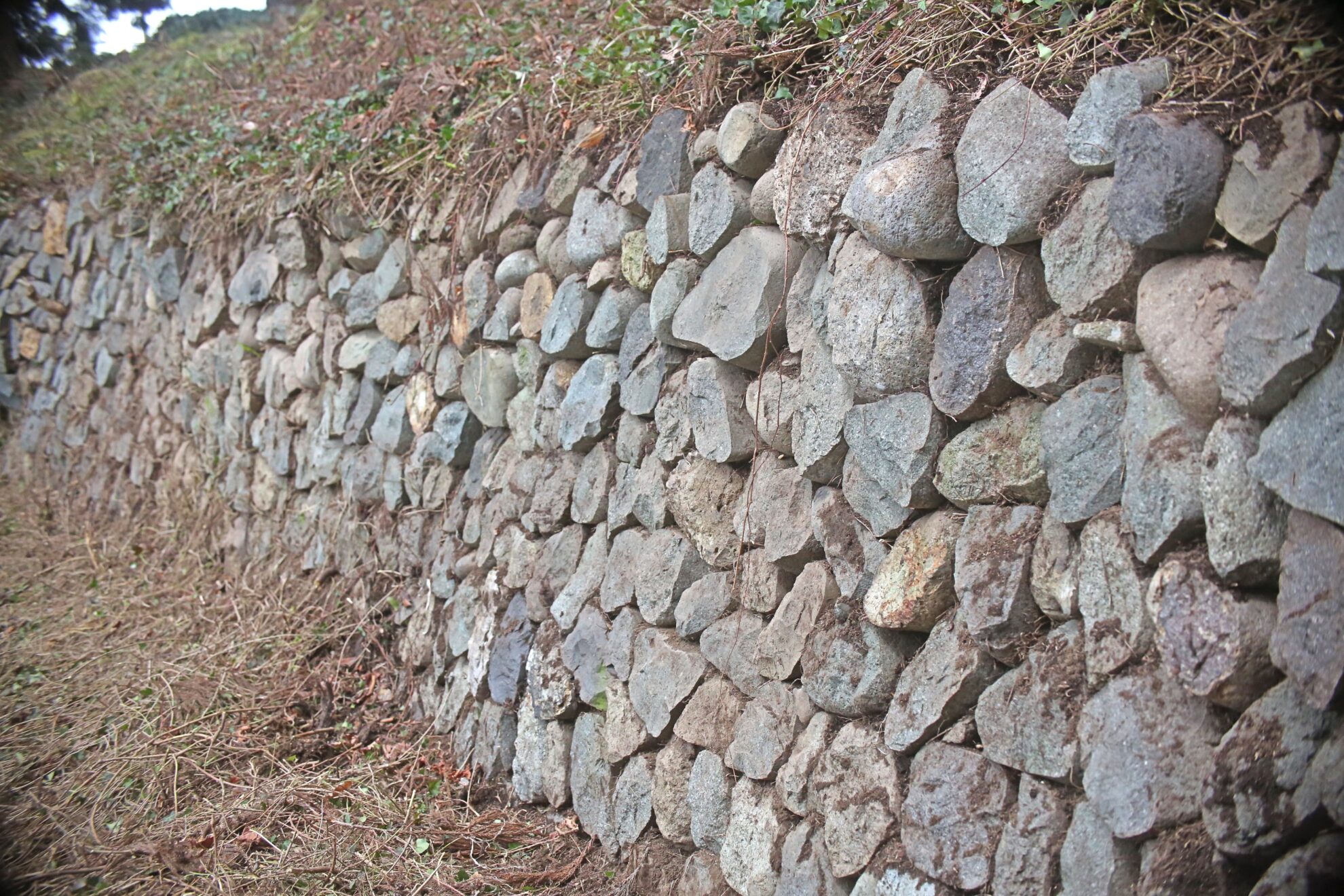
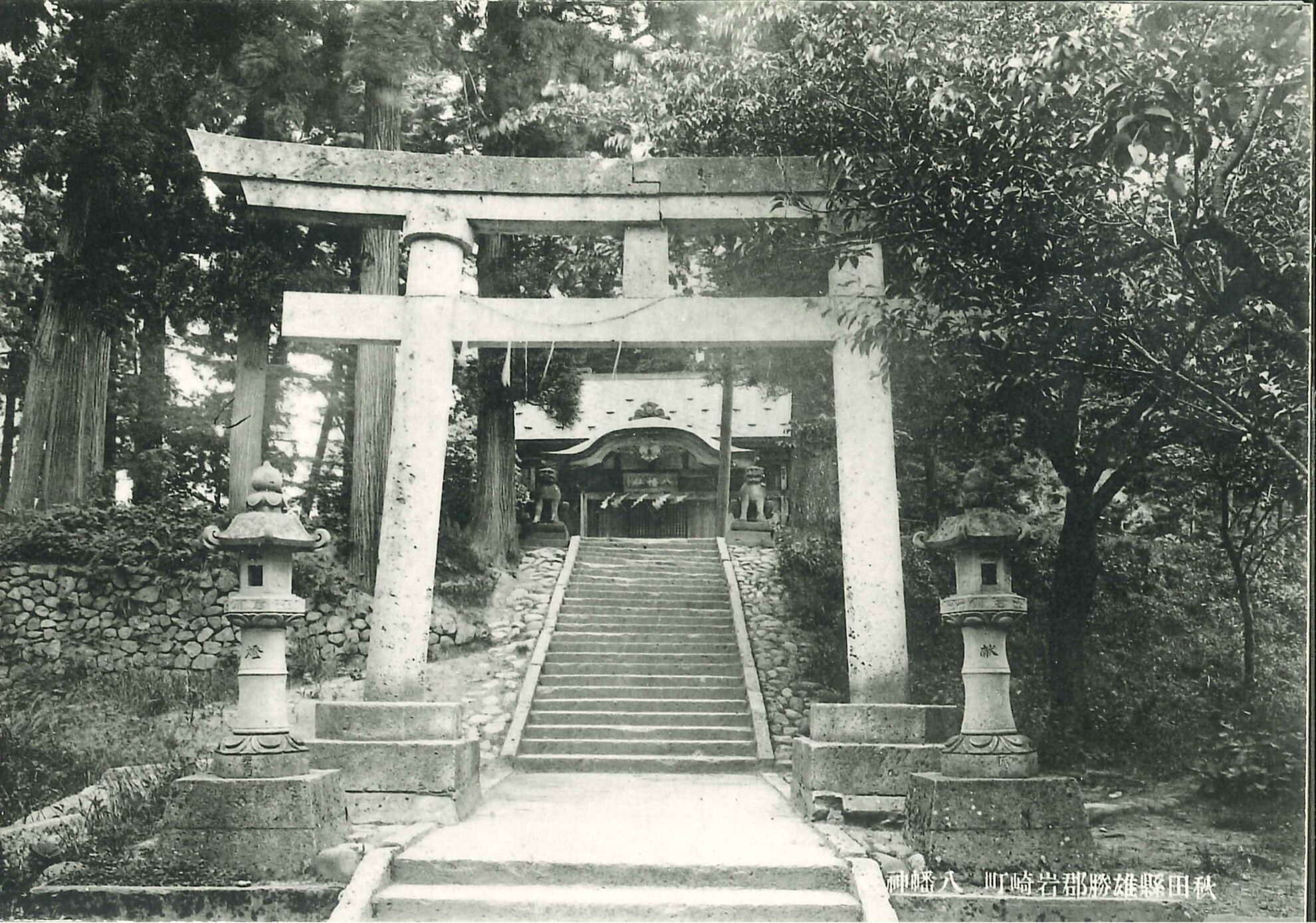
The Akita Sakigake-Shimpo dated April 6 introduced the “Iwasaki Hachiman Shrine Stone Wall Restoration Project. In a photo of the Hachiman Shrine from the early Showa period (early 1926), which remains in a postcard of Iwasaki Town’s scenic beauty, a stone wall is seen piled up around the stone steps and on the slope on the left side. Based on this photo, a gardener working for Yamamo conducted an environmental survey of the area around the shrine and found a former stone wall on the left and a horse-drawn carriage path on the right.
For more than 900 years, Iwasaki Hachiman Shrine has served as a symbol of the town, with the town’s prominent figures serving as head of the Ujiko clan and the local residents adoring the shrine through seasonal festivals. Starting with the oldest history of Iwasaki Town, “Iwasaki Town Local History,” compiled by Shichinosuke Takahashi, an ancestor of the shrine, the Hachiman Shrine has been included in successive history books and Iwasaki Town scenic postcards, and its status as a shrine is the highest in Yuzawa, along with Yuzawa Atago Shrine.
The Iwasaki Hachiman Shrine is said to have been built by Minamoto no Yoshie in 1087, when he attacked Kiyohara no Iehira and Takehira, a powerful clan in Ou, at the Kanazawa Fence, and dedicated an abumi to pray for victory (Iwasaki Hachiman Shrine History)
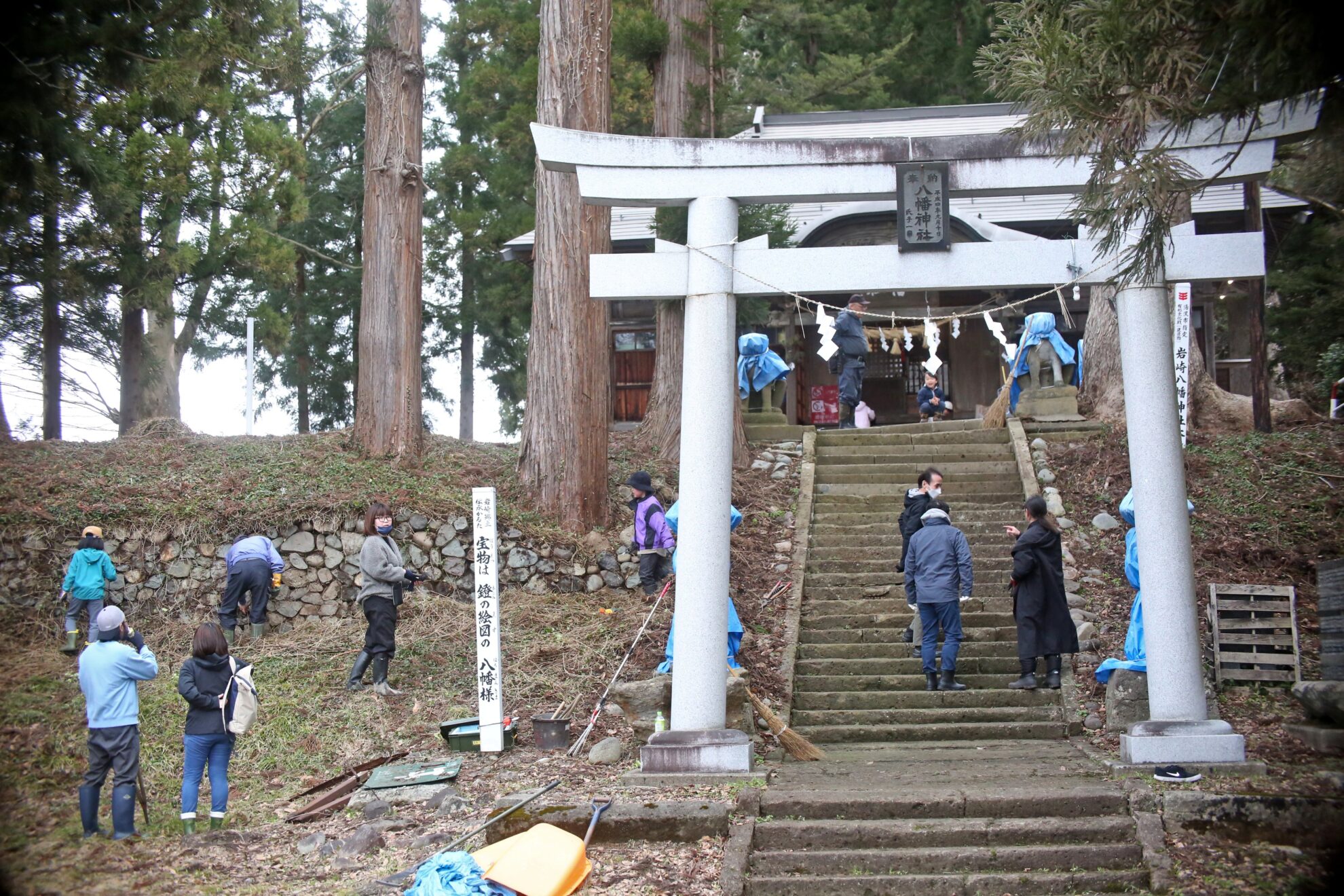
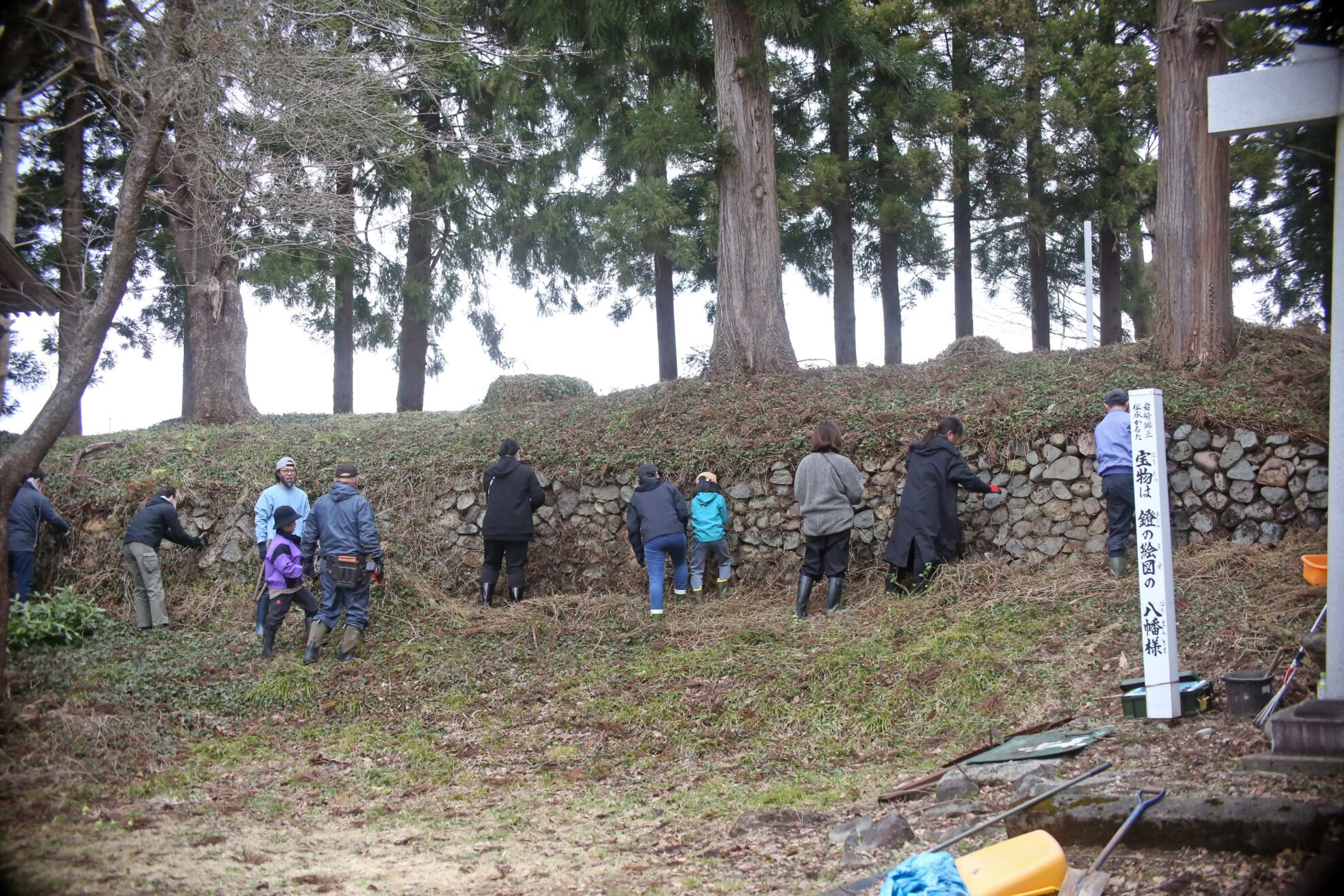
The restoration of this stone wall is not only meant to preserve the landscape, but also has a spiritual meaning to foster love for one’s hometown that will revive the dignity and pride of those days. To achieve this, I believe it is necessary to engage with many people inside and outside of the region and to accomplish this through their joint efforts. From outside the region, Tohoku Gakuin University, with whom we are collaborating on our cultural property registration and historical research, and people from the Akita Branch of Japan Airlines, with whom we share local activities through news gathering. Within the Iwasaki area, the Iwasaki Hachiman Shrine Ujiko General Assembly, Ishimago-Honten, and Hanayoshi Botanical Garden. From inside and outside of Yuzawa, we received visitors from Yuzawa Higashi Elementary School and the PTA association. We were very happy to have more than 20 people attend the event during the short notice period.
As the Akita Sakigake-Shimpo article states, we hope to establish a group of volunteers to protect historically and culturally important places such as shrines and river areas with the hands of the community itself, and to pass them on to the next generation. We would like to ask for your broad support and cooperation in this activity._mediainfo._newspaper
Iwasaki Hachiman Shrine (Yuzawa City) Residents in the Iwasaki area of Yuzawa City have begun to remove ivy and improve the landscape around the grounds of Iwasaki Hachiman Shrine, which has been a familiar symbol of the community. As the population declines and the aging of the population and the declining birthrate make it difficult to carefully manage the area, the residents are aiming to restore the beautiful landscape by making use of their ties to each other.
Residents work to revive the landscape Removing ivy covering stone walls
Reporter: Tomomi Tateoka
According to the “Catalogue of Cultural Properties of Yuzawa City” compiled by the city, the main shrine was built in 1790, and was registered as a tangible cultural property of the city in 1973. The shrine is widely popular in the community, with a festival held every September.
In recent years, the shrine has been in need of more people to manage it. According to Yasushi Takahashi, 45, the seventh generation head of Yamamo Brewery, who is the general guardian of the shrine, and others, it has been difficult to maintain the entire vast grounds of the shrine, although they have been sweeping up fallen leaves near the main shrine building and enclosing it for the winter.
On March 29, the brewery spearheaded a project titled “Stone Wall Restoration Project. About 20 local residents gathered to remove ivy and fallen leaves that covered the entire surface of two stone walls. The work was completed in about 2.5 hours, using rakes to collect the ivy and leaves that had been cut with scissors. The stone steps in front of the shrine building were also cleaned.
Mr. Junji Ishikawa, 75, of Iwasaki, who participated in the event, noted that “Kashima-sama,” a giant straw doll that is revered as a god to ward off bad luck, has been worshipped in the Iwasaki area for many years and said, “This area has a long history of preserving local culture. The maintenance of the shrine has become more difficult over the years, but we are happy if we can strengthen the bonds of the community and restore the beautiful scenery through our efforts,” he said.
Students and alumni of the Tohoku Gakuin University (Sendai, Miyagi Prefecture) Faculty of Engineering also participated in the work, having been involved in the survey of the store and main building of the Yamamo Brewery when it was selected for inclusion on the National Tangible Cultural Properties list last summer. Employees of the Akita branch of Japan Airlines, which has business ties with the brewery, also participated.
They plan to continue working on the project on a regular basis. Mr. Takahashi said, “I would like to establish a volunteer group centered on local residents to expand the scope of our efforts.
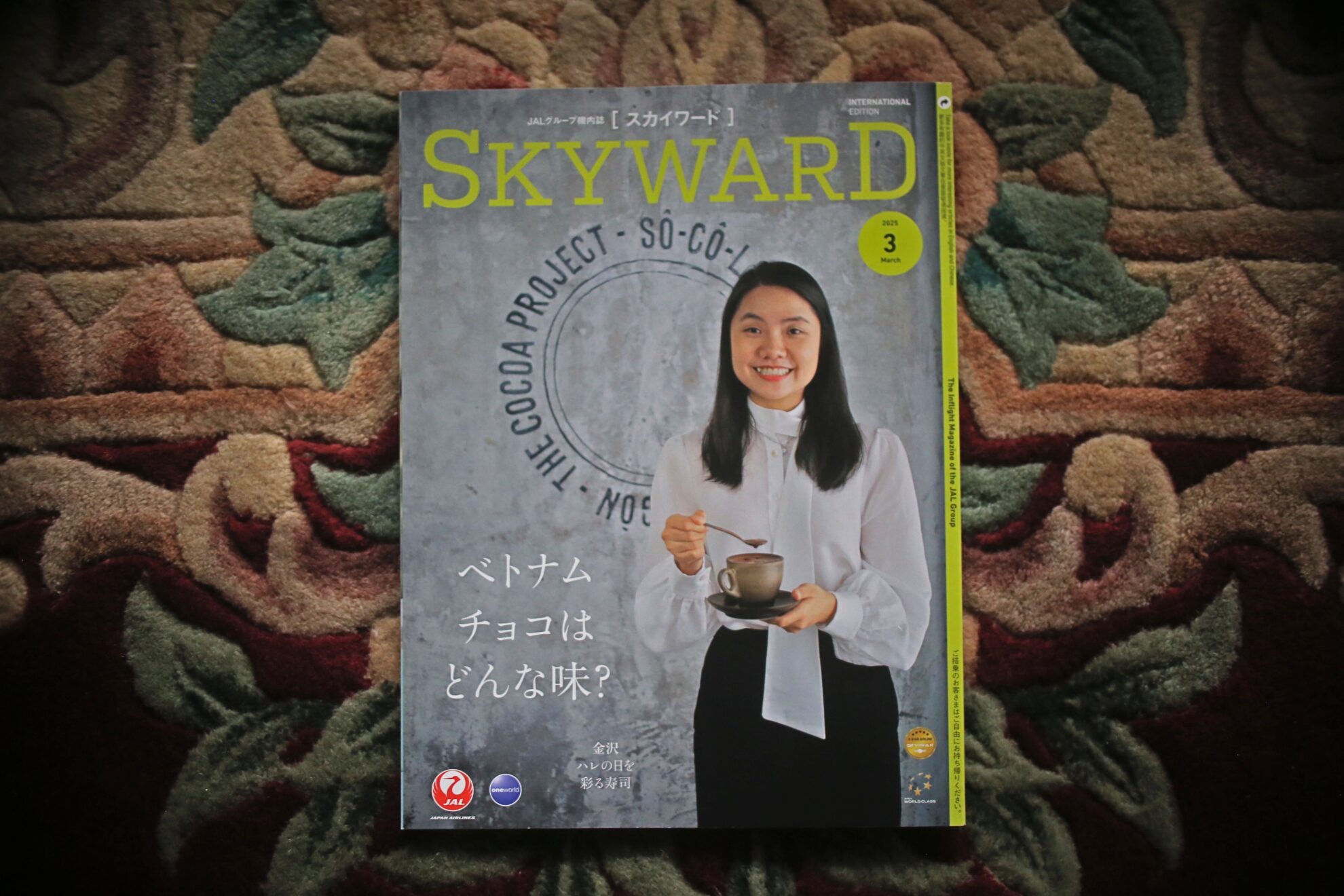
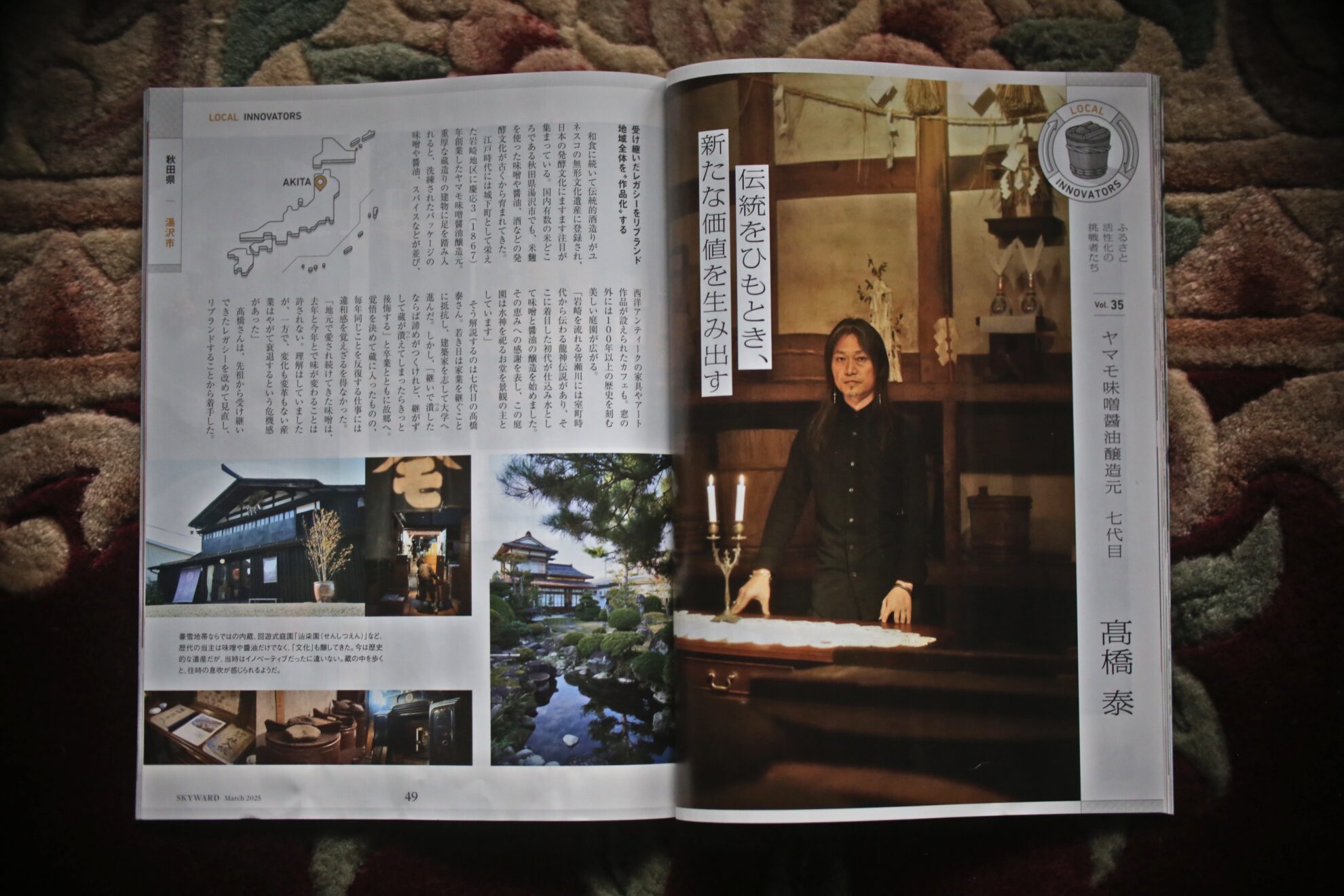
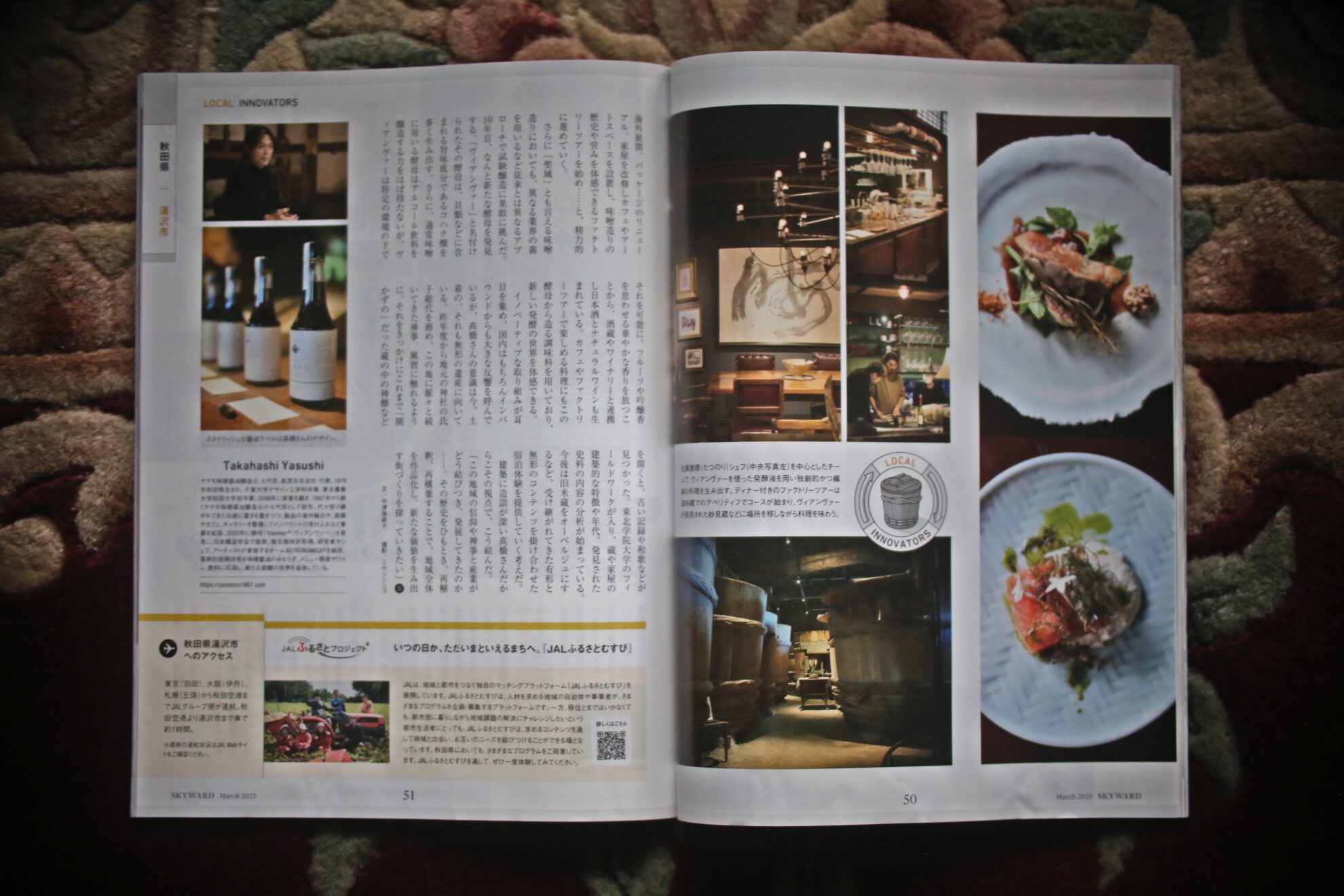
JAL Group’s in-flight magazine “SKYWARD” featured an article on the activities of the seventh generation Takahashi family in the “LOCAL INNOVATERS: Challengers of Hometown Revitalization” section. I was able to talk about the family’s miso and soy sauce brewing business and the Hachiman Shrine’s Ujiko (shrine attendant) role that the Takahashi family has continued to play for generations. The family business and Shinto rituals were originally connected, but as faith has waned with modernization, it is both strange and inevitable that they have once again become linked in my own mind. I am searching for ways to give form to this sense of personal connection through our services and products. I would like to explore the original role of the brewery and how it should be. We invite you to read our articles._mediainfo._magazine
Challengers of Hometown Revitalization Yamamo Brewery Yasushi Takahashi, 7th generation
Creating New Value by Unraveling Tradition
Text / Asako Nakatsumi Photography / Shingo Miyaji
Rebranding the inherited legacy Making the entire region into a “work of art
Following Japanese food, traditional sake brewing has been registered as a UNESCO Intangible Cultural Heritage, attracting more and more attention to Japan’s fermentation culture. Yuzawa City in Akita Prefecture, one of Japan’s leading rice-producing regions, has long nurtured a fermentation culture that includes miso, soy sauce, and sake made with rice malt. The Yamamo Brewery was founded in 1867 in the Iwasaki district, which prospered as a castle town during the Edo period. Stepping into the stately warehouse building, you will find miso, soy sauce, and spices in sophisticated packaging, as well as a café with antique Western furniture and artwork. Outside the window is a beautiful garden with over 100 years of history.
The legend of the dragon god that has been told since the Muromachi period (1336-1573) is said to have existed along the Minase River, which flows through Iwasaki, and the first generation of the company focused on this legend and began brewing miso and soy sauce as a preparation water. To express our gratitude for this blessing, this garden features a hall dedicated to the water god as the main feature of the landscape,” explains Yasushi Takahashi, the seventh generation owner. As a young man, he resisted the idea of taking over the family business and went to college with the intention of becoming an architect. However, he returned to his hometown upon graduation, saying, “If I took over the brewery and crushed it, I could give up, but if I did not take over and the brewery crushed, I would surely regret it.
He entered the brewery with determination, but he could not help but feel a sense of discomfort in a job where he had to do the same thing over and over every year. The miso that has been loved by the locals cannot be allowed to taste different from last year to this year. I understood that, but at the same time, I had a sense of crisis that an industry without change and innovation would eventually decline.” Mr. Takahashi began by reevaluating and rebranding the legacy that had been passed down from his ancestors.
The company has been vigorously expanding overseas, renewing its packaging, renovating a house to create a café and art space, and starting factory tours that allow visitors to experience the history and operations of miso making…. In the 10th year, they discovered a new yeast named “Viamver®”.
The yeast named ‘Viamver®’ produces a large amount of succinic acid, a flavor component found in shellfish. Furthermore, while the yeasts typically used in miso have almost no ability to ferment alcoholic beverages, Viamver® can do so under certain conditions. It emits a bright aroma reminiscent of fruits and ginjo sake, leading to collaborations with sake breweries and wineries to produce both Japanese sake and natural wine. The seasonings made from this yeast are also used in dishes that can be enjoyed at cafes and factory tours, offering an experience of a new world of fermentation.
This innovative approach has attracted widespread attention and garnered a strong response not only domestically but also among inbound visitors. However, Mr. Takahashi’s focus is now on local, intangible heritage. Since last year, he has served as a representative of parishioners for the local shrine, engaging with the rituals and customs that have continued in this area for generations. This led him to open shrine shelves within the storehouse that had previously been ‘closed off,’ where he discovered old records and traditional poems. Fieldwork by Tohoku Gakuin University has begun, analyzing the architectural features and ages of the storehouses and homes, as well as the content of the discovered historical materials.
In the future, the plan is to turn the old rice warehouse into an auberge and offer lodging experiences that combine the tangible and intangible contents that have been passed down from generation to generation. Mr. Takahashi, who has a deep knowledge of architecture, concluded with his own perspective. How have the region’s beliefs and rituals been connected to its industries and how have they developed? By reinterpreting and reconstructing this history, we would like to create a work of art for the entire region and explore urban development that creates new value.
.
Takahashi Yasushi Seventh generation head of Yamamo Brewery and representative of TAKAMO&Corp. In 2006, he took over the family business and became the seventh generation of the Yamamo Brewery, which has been in business since 1867. In 2020, he discovered the yeast “Viamver®” and presented it at the Japanese Society of Brewing Science. Obtained a patent for the microorganism. Formed ASTRONOMICA®, a team of researchers, chefs, and artists, to apply innovative fermentation technology not only to miso and shoyu, but also to menu development, wine, and beverages, in pursuit of a new world of fermentation.
The JAL Group’s in-flight magazine “SKYWARD” is carried on international and domestic flights and includes features on overseas and domestic travel narrowed down from unique perspectives, interviews with topical people, interesting essays, information on various events, as well as notices and special offers from the JAL Group, route maps, etc. It also includes JAL Group announcements, special offers, route maps, and more.
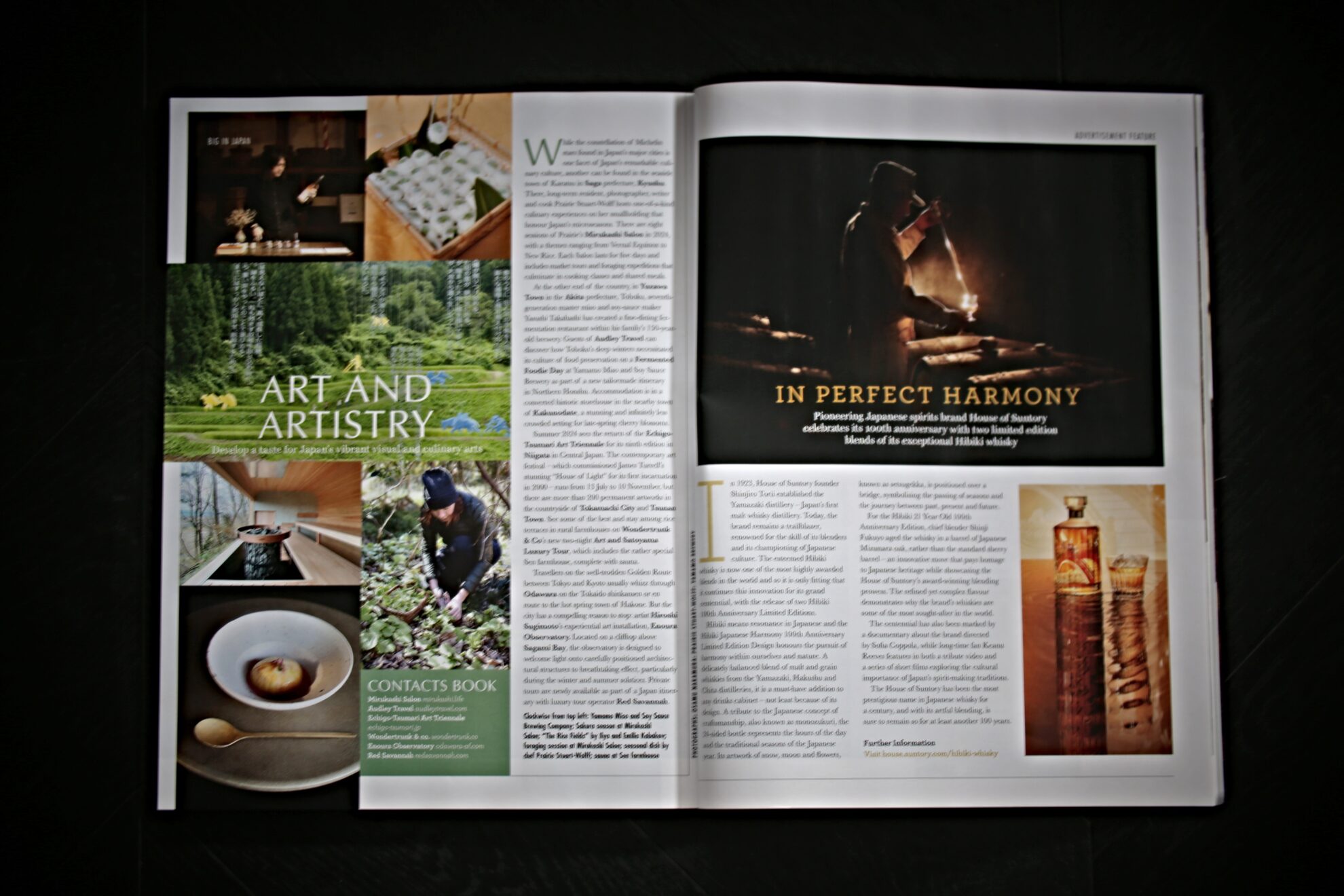
ラグジュアリートラベル誌Conde Nast Traveller December 2023にてヤマモの記事が掲載されております。以前、弊社のDinner Tourに起こしいいただいたコンシェルジュの方がメディアにご紹介し、今回の掲載に至りました。記事は”BIG IN JAPAN”というタイトルで日本各地の最新のコンテンツを取り上げており、その中の”ART AND ARTISTRY(芸術的な食)”の特集で取り上げていただいております。カフェ業態からはじまり、現在はレストランとしてViamver®酵母を活用した革新的発酵の取り組みを続けてきたことがグローバルで評価されたこと、非常に嬉しく思います。ぜひ皆様にも、ヤマモ独自の発酵の世界を味わっていただきたいと思います。
.
News of Article Publication_Conde Nast Traveller December 2023
Yamamo is featured in the luxury travel magazine Conde Nast Traveller December 2023. The article was written by a concierge who had been on one of our Dinner Tours and introduced Yamamo to the media. The article is titled “BIG IN JAPAN” and features the latest content from around Japan, including a feature on “ART AND ARTISTRY. The article is titled “BIG IN JAPAN” and features the latest content from around Japan. We are very pleased that our innovative fermentation efforts, which began as a café and now as a restaurant using Viamver® yeast, have been recognized on a global scale. We hope that everyone will enjoy Yamamo’s unique world of fermentation._mediainfo._overseas
Develop a taste for Japan’s vibrant visual and culinary arts
At the other end of the country, in Yuzawa Town in the Akita prefecture, Tohoku, seventhgeneration master miso and soy-sauce maker Yasushi Takahashi has created a fine-dining fermentation restaurant within his family’s 150-yearold brewery. Guests of Audley Travel can discover how Tohoku’s deep winters necessitated its culture of food preservation on a Fermented Foodie Day at Yamamo Miso and Soy Sauce Brewery as part of a new tailormade itinerary in Northern Honshu.
Conde Nast Traveller is one of the most prestigious travel magazines in the United States, published by Conde Nast, a major American publishing company. Conde Nast Traveller annually announces its Readers’ Choice Awards in the form of rankings of categories related to the tourism industry in each country. The awards are presented in the form of “Readers’ Choice Awards”. The awards are widely known both nationally and internationally for selecting hotels that offer the highest quality of service, and are voted on by the readers of the travel magazine. It is also said to be the oldest and most prestigious travel-related reader-submitted ranking.